
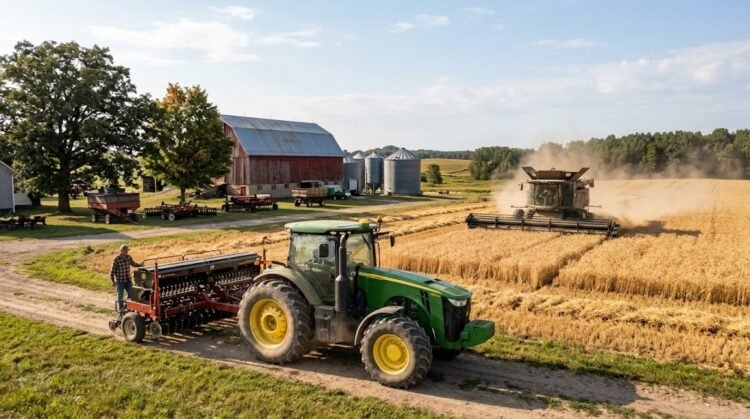
Why the Right Equipment Matters for Your Farm
Every successful farm runs on more than good soil and hard work — it runs on dependable farm equipment. Whether you manage a small family plot or a large commercial operation, the tools you choose directly affect how much you plant, how fast you harvest, and how much profit you keep at the end of the season. Outdated or poorly matched farm equipment slows down every task, from tilling to transport. Well-chosen machinery saves time, reduces labor costs, and lowers the risk of crop loss. Before buying anything new, step back and think about what your land, crops, and budget actually need.
Essential Types of Farm Equipment Every Operation Needs
Most farms rely on a core set of farm equipment to handle daily operations. Tractors remain the backbone of nearly every farm, powering everything from plowing to hauling. Beyond tractors, growers typically need tillers, seeders, sprayers, and harvesters suited to their specific crops. Livestock operations add another layer, often requiring feeders, trailers, and fencing tools. According to the USDA’s farm resources (link: https://www.usda.gov), equipment choices should match not just crop type but also field size and terrain. Choosing the right machinery for your workload, rather than buying based on trends, keeps your operation efficient and spending under control.
New vs Used: Which Option Fits Your Budget
One of the biggest decisions a farmer faces is whether to buy new or used farm equipment. New machines come with warranties, the latest technology, and fewer early repair costs, but they carry a much higher price tag. Used machinery, by contrast, can offer excellent value if you inspect it carefully and buy from a trustworthy source. Many farmers now compare listings online before making a purchase. If you’re looking for pre-owned equipment at a fair price, sellbuy.deals (link: https://sellbuy.deals/) is a solid place to browse local listings, negotiate directly with sellers, and avoid inflated dealer markups. Whichever route you choose, always check engine hours, service history, and part availability before committing.
Keeping Your Machinery in Top Condition
Buying quality farm equipment is only half the job — keeping it running well is just as important. Regular maintenance extends the life of your machines and prevents costly breakdowns during critical planting or harvest windows. Simple habits make a big difference: changing oil on schedule, greasing moving parts, checking tire pressure, and storing equipment properly during off-season months. The Penn State Extension (link: https://extension.psu.edu) offers detailed maintenance checklists many farmers find useful for keeping records organized. Neglecting routine care often leads to bigger repair bills later, so a little attention now saves real money down the line.
Where to Find Reliable Farm Equipment
Sourcing dependable farm equipment doesn’t have to mean driving from dealer to dealer. Local auctions, agricultural co-ops, and online platforms all offer different advantages depending on what you’re looking for. Online marketplaces have made it easier to compare prices, read seller details, and find the right machinery without leaving your property. For farmers who want to sell equipment they no longer use, or pick up a good deal on something new to them, sellbuy.deals connects buyers and sellers directly, making the process faster and more transparent than traditional classified ads.
Final Thoughts on Smart Equipment Investments
Choosing the right farm equipment is one of the most important decisions a farmer makes, shaping both daily efficiency and long-term profitability. Take time to assess your land, your crops, and your budget before buying anything. Weigh the pros and cons of new versus used options, and commit to a maintenance routine that protects your investment. With thoughtful planning, the equipment you choose today can support your operation for many seasons to come.

